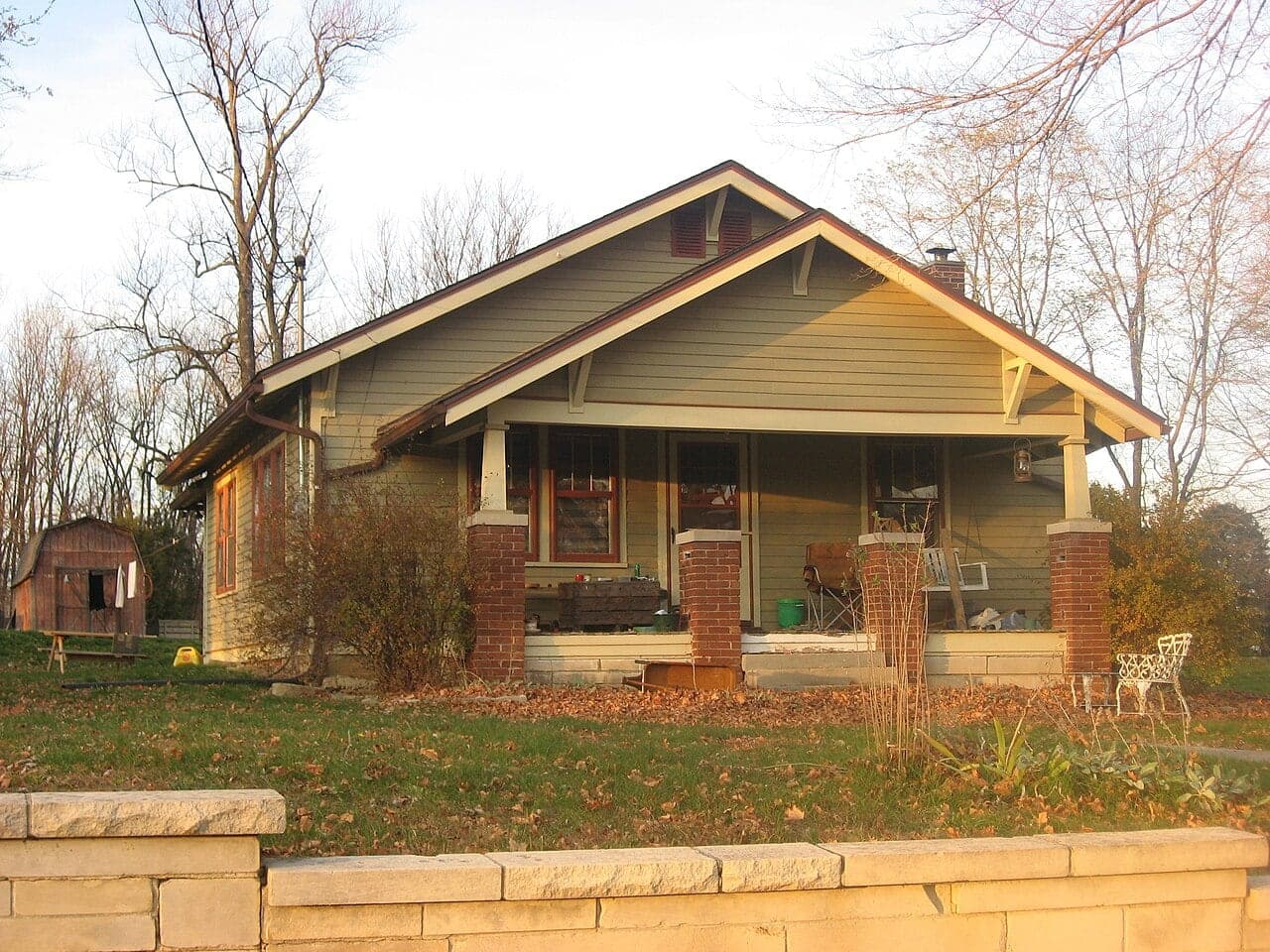
Sage shifts more than most colors
Sage sits between grey and green, so lighting decides which side wins. Under overcast skies and on north-facing walls it tends to look grey. In warm afternoon sun on a west face it reads greener and slightly yellow. A sage that looks perfect on a chip can disappear into grey on a shady front.
If you want people to see green, choose a sage with a little more color than you think you need. Test two or three on large boards, outdoors, on the actual front.
Trim, door and roof pairings
- Trim: warm whites and creams soften sage and look classic. Bright whites look fresher but can be stark. Darker trim, such as olive or charcoal, gives a modern tone-on-tone look.
- Door: natural wood, barn red, clay, deep navy or a darker green.
- Roof: weathered grey blends, charcoal and brownwood blends all work. Black can be heavy with very light sage.
- Stone and brick: sage pairs well with warm stone and red-brown brick.
Which houses suit sage
Sage suits craftsman, cottage, bungalow and farmhouse styles, and houses surrounded by trees or gardens. It is less common on very modern houses, where it can look soft; a deeper olive often works better there.
Sage is a mid-light tone, so it is forgiving of dust and pollen and does not show fading as quickly as dark colors. On vinyl siding it is usually within the range manufacturers allow for painting.
Sample in the right season
Greens interact with the planting in front of them. A sage sampled in winter against bare branches and snow can look very different once the garden is in leaf. If you can, look at sample boards in late spring or summer, or at least imagine the green foliage in front of the wall. Shrubs with purple, gold or silver foliage look especially good against sage, while a wall of plain green hedging in front can make a sage house feel monotone.
Sage on different materials
Sage looks different on each wall material. On lap siding, the shadow lines make it read a step darker. On board and batten, it looks soft and rural. On painted brick or stucco, sage can look chalky and earthy, which many owners like. On vinyl, sage is available from many manufacturers as a factory color, which saves repainting.
If you want a more saturated green, try a sage on the body and a deeper olive on shutters or the garage door to reinforce the green without making the whole house dark.
Sage also changes with neighboring houses. Next to beige houses it reads greener; next to grey houses it reads more grey. Look at the street before choosing.
Trim choice changes sage as well. Bright white trim pushes it cooler and greyer, while cream trim warms it and brings out the green. Render both trims on your photo with the same sage to see which direction you prefer before buying samples.